THE VINEYARDS OF STEIN
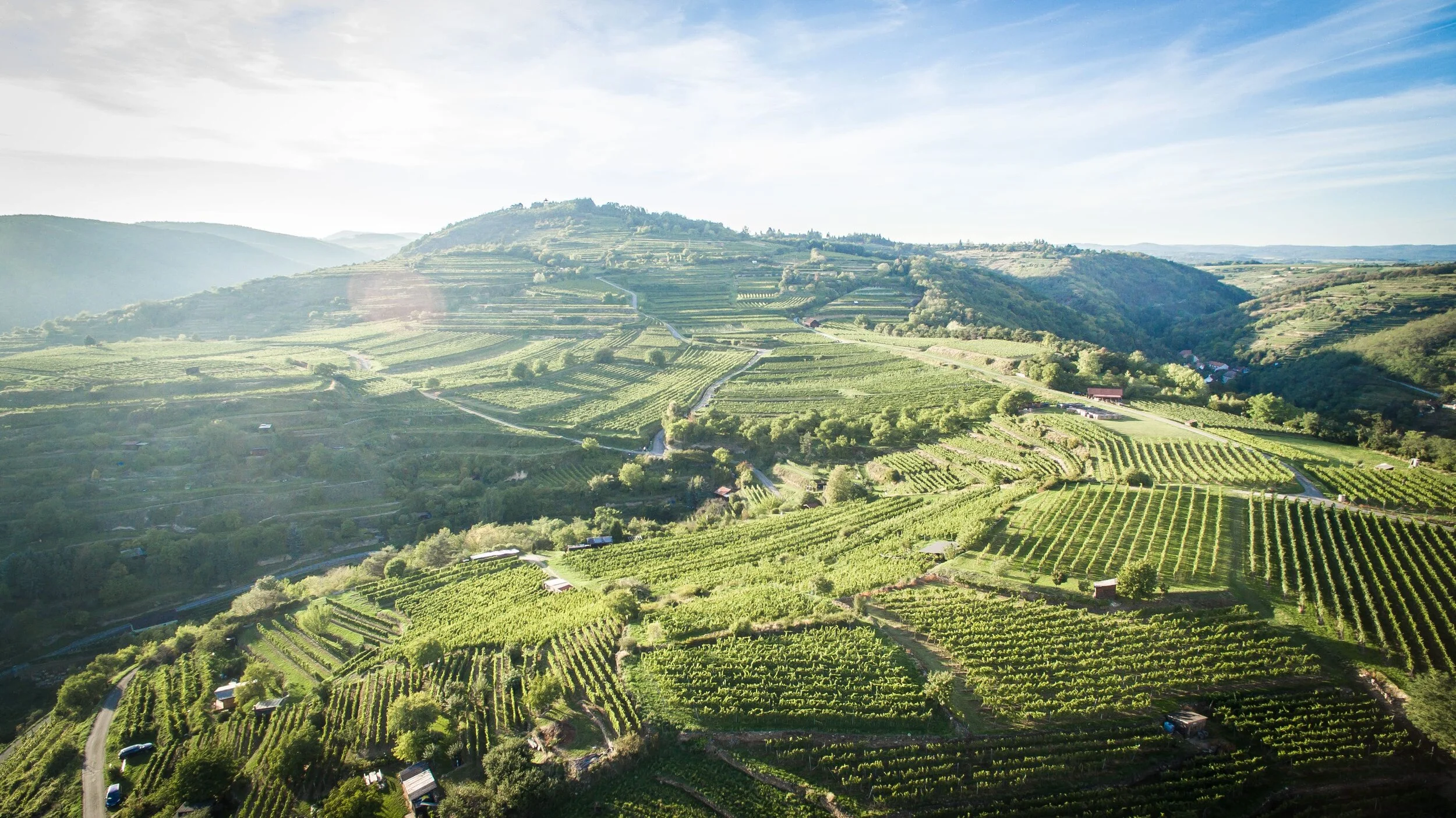
Eight sites, each with its own geology, exposure and history. I vinify every vineyard separately because origin is not an abstract idea here. It can be tasted.

STEINER PFAFFENBERG
The Pfaffenberg rises steeply above Stein, facing south-east between roughly 199 and 378 metres. Gföhl gneiss dominates, with mica schist and amphibolite in places. The site was recorded in 1230 as mons clericorum, the mountain of the clergy, and was historically connected with the bishops of Passau.

STEINER GAISBERG
The Gaisberg faces south to east at around 280 to 350 metres. Gföhl gneiss and conglomerate shape the soils. The sheltered position between Pfaffenberg and Hund gives the terraces a distinct microclimate, with later morning sun and warmth that remains into the evening.

STEINER HUND
The south-facing terraces of the Hund lie at roughly 230 to 290 metres. Thin humus covers crystalline rock, while some sections contain conglomerate and sandy loess. According to a family story, an ancestor once exchanged this vineyard for a dog during a time of famine. Whether every detail is exact or not, the story has stayed with the site.

STEINER GRILLENPARZ
Grillenparz is a steep south-east-facing site between roughly 262 and 335 metres. Paragneiss meets calcareous conglomerate and sandy gravel. The name appears as ad grillenporce as early as 1180 and is associated with the crickets that still belong to these warm terraces.
STEINER SCHRECK
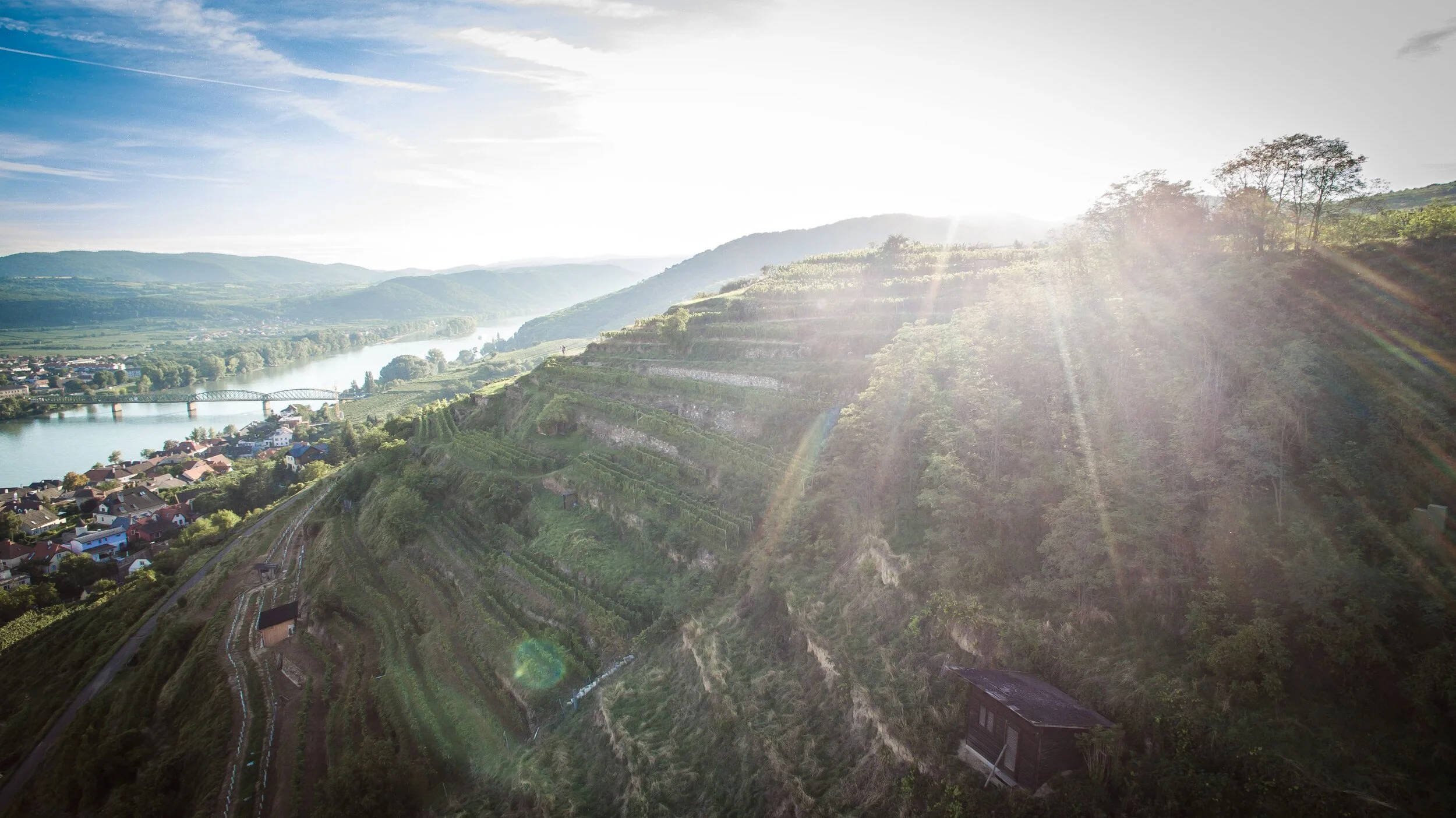
Schreck faces south-east to south between roughly 259 and 323 metres. Foliated amphibolite and crystalline paragneiss form a hard, skeletal base, held by old dry-stone walls. The name is documented in 1360 as Schrekch and may derive from the Bavarian word schricke, meaning a deep cut in the terrain.
STEINER BRAUNSDORFER
Braunsdorfer lies high above Stein, facing south and south-east between roughly 300 and 450 metres. The geology shifts from paragneiss towards Gföhl gneiss. It is one of the steepest and stoniest places I work, producing Riesling with firmness, coolness and a clear mineral line.

STEINER GOLDBERG
Goldberg faces south and south-east at around 300 to 350 metres. My parcel is rooted in deep loess and loam, while other parts of the site are noticeably stonier. The origin of the name is not clearly established, but the soil gives the wines depth without taking away their tension.

STEINER KÖGL
Kögl lies about 900 metres from the Danube and is protected by the Kreuzberg. Weathered primary rock, gneiss and schist shape the site. The name comes from Kogel, a rounded hill. The wines combine ripe fruit with a firm, cool structure.
I harvest and vinify each vineyard separately. After skin contact, the musts ferment spontaneously and the wines remain on their full lees for a long time. The method stays consistent. The character comes from the site.
